
Beyond Skin Deep:
Dismantling the Myths of Colorism and Featurism

Introduction
Few conversations in contemporary discourse are as layered, politically charged, and consequentially misunderstood as those surrounding colorism and featurism within Black communities and broader society. At their core, both phenomena describe systems of prejudice rooted not merely in race, but in the specific gradations of skin tone and the perceived proximity of one’s facial features to a Eurocentric aesthetic standard. While these biases are real and their effects measurable, a parallel myth has taken root — one that misreads natural African morphological diversity as evidence of Eurocentric idealization. This essay seeks to do two things simultaneously: to honestly examine the documented harms of colorism and featurism, and to challenge the reductive narratives that deny the inherent beauty and authenticity of African phenotypic variation.
The conversation matters because how we frame Black beauty has profound implications for how Black people — particularly Black women — understand their own worth, navigate professional and social spaces, and see themselves reflected in media, art, and culture. Getting the analysis right is not merely an academic exercise. It is an act of justice.
I. Defining the Terms: Colorism and Featurism
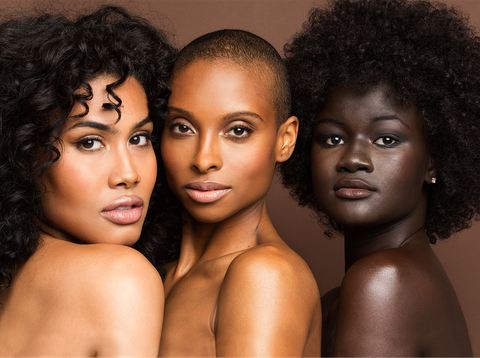
Colorism, a term coined by author Alice Walker in her 1983 collection In Search of Our Mothers’ Gardens, refers to discrimination based on skin tone, typically operating within racial groups. In practice, colorism within Black communities and in broader society has historically privileged lighter-skinned Black individuals over their darker-skinned counterparts, granting them greater access to opportunities in employment, education, entertainment, and social mobility. This hierarchy did not emerge in a vacuum — it was constructed deliberately during the era of American slavery, when enslaved people with lighter skin, often the offspring of slaveholders’ sexual violence, were granted marginally better conditions in exchange for proximity to whiteness.
Featurism is a closely related but distinct concept. Where colorism concerns skin tone, featurism concerns the specific features of a person’s face and body — the width of one’s nose, the fullness of one’s lips, the texture of one’s hair, the shape of one’s eyes. Featurism holds that features perceived as more European (narrower noses, thinner lips, straighter hair) are more desirable or professional, while features perceived as more distinctly African are coded as less attractive or less suitable for mainstream representation. Both systems operate as extensions of white supremacist aesthetics — the elevation of European physical characteristics as the universal standard of beauty and respectability.
Together, colorism and featurism constitute an interlocking system of racialized aesthetics that has been absorbed and perpetuated not only by white-dominated institutions, but by communities of color themselves, often without conscious awareness. Their effects range from the interpersonal — the preference for lighter-skinned spouses within families, the bullying of dark-skinned children — to the structural, including documented disparities in hiring, wage gaps, and representation in entertainment.
II. The Historical Architecture of Eurocentric Beauty Standards
To understand why colorism and featurism have such staying power, one must trace the historical mechanisms by which European aesthetics became codified as universal. The project of white supremacy required not only the economic subjugation of African and Indigenous peoples, but their aesthetic subjugation as well. European philosophers, pseudoscientists, and artists of the 18th and 19th centuries constructed elaborate frameworks to position African features — dark skin, broad noses, full lips, tightly coiled hair — as markers of inferiority, savagery, and deviance. These frameworks, now thoroughly discredited by modern anthropology and genetics, nonetheless left deep cultural sediment.
The impact extended into the 20th century through Hollywood’s casting practices, the beauty industry’s product lines designed exclusively for straight hair and light skin, and magazine standards that systematically excluded dark-skinned models. When Black women did appear in mainstream media, they were often those whose features were deemed least threatening or most palatable to a white audience — a selection process that was read, understandably, as a confirmation that only certain kinds of Blackness were acceptable.
This history is real, documented, and ongoing. Studies have shown that dark-skinned Black women are underrepresented in media relative to their lighter-skinned counterparts. Research published in sociological journals has demonstrated wage penalties associated with darker skin tones among Black workers. Legal scholars have begun theorizing “skin tone discrimination” as a distinct category warranting its own protections. The structural reality of colorism is not in question.
III. The Myth of Europeanized Features
Where the conversation becomes more complicated — and where a different kind of harm can occur — is in the interpretation of which Black women are celebrated and why. A persistent claim in some critical frameworks suggests that the Black women most elevated by mainstream media and entertainment are those whose features approximate European aesthetics: lighter skin, narrower noses, thinner lips, straighter or more loosely textured hair. The shorthand for this concept, often rendered as “white woman dipped in chocolate,” attempts to capture the argument that successful Black women owe their prominence to phenotypic proximity to whiteness.
This framing, while born of legitimate frustration with real representational inequities, contains a critical error: it misidentifies the natural morphological diversity of African-descended populations as evidence of Europeanization. The error is understandable in context, but it carries its own damaging implications, most significantly the erasure of the full spectrum of African phenotypic expression.
Biological anthropology and craniofacial morphology tell a more accurate story. African populations — owing to the continent’s status as the origin point of all human life and the longest period of human habitation — exhibit greater genetic and phenotypic diversity than any other continental population group. This means that the range of features present among people of African descent, including variations in nose width, facial proportions, skin tone, and skull shape, is broader and more varied than what is found in European populations. Features that might appear to approximate European aesthetics when viewed through a Eurocentric lens may in fact represent a different point on a distinctly African morphological continuum.
IV. Morphological Evidence: The Science of African Facial Diversity
Nasal Index and Craniofacial Structure
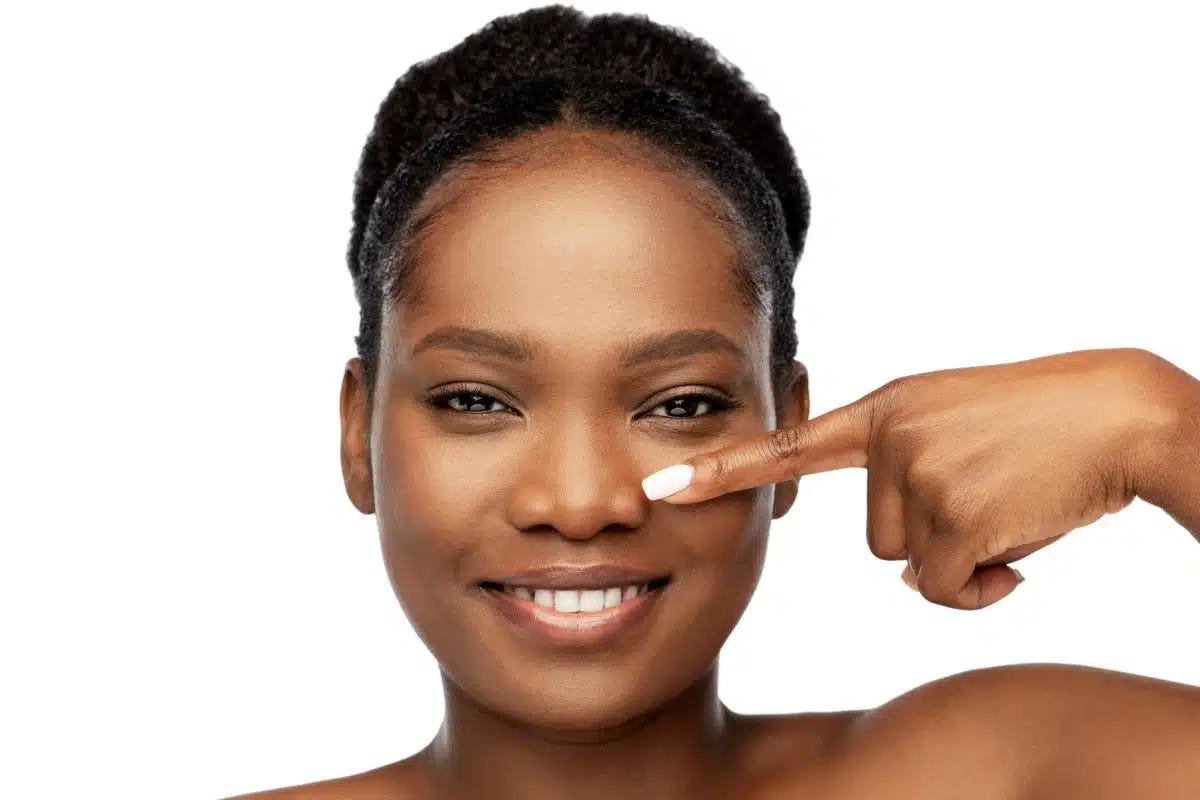
One of the most quantifiable measures of facial morphology is the nasal index — the ratio of nasal width to nasal height, expressed as a percentage. Anthropological research consistently demonstrates that populations of African descent exhibit higher nasal indices (broader noses relative to their height) than European populations. Individuals of African descent typically fall in the platyrrhine range (nasal index of 85 and above), while those of European ancestry tend toward the leptorrhine range (70–85).
When the facial structures of widely celebrated Black celebrities are examined — across a spectrum of skin tones, from the darkest to the lightest — their nasal structures consistently fall within African morphological norms. Their facial proportions, cheekbone placement, jaw structure, and cranial dimensions reflect African craniofacial patterns, not European ones. The presence of lighter skin or multiracial heritage does not erase these underlying structural characteristics. African morphological traits are remarkably persistent.
The Breadth of African Phenotypic Variation
It is essential to recognize that African populations are not phenotypically monolithic. The facial features of people from West Africa differ from those of East Africa, which differ from those of Southern Africa, which differ from those of the Horn of Africa. All of these variations are authentically, ancestrally African. A Somali woman and a Ghanaian woman may present with visibly different nasal structures, facial lengths, and skin tones — and both are fully, unambiguously Black. The diversity within Blackness is not an approximation of other racial categories. It is the natural consequence of Africans being the oldest and most genetically diverse population on Earth.
This means that when a dark-skinned woman and a lighter-skinned woman of African descent are both celebrated for their beauty, and when the lighter-skinned woman’s features are characterized as Europeanized, the characterization may be doing something deeply problematic: denying a portion of African phenotypic diversity its identity and legitimacy. It may be coding one end of the African morphological spectrum as foreign, when in fact it is simply another expression of African ancestry.
V. The Harm in Misreading African Diversity as European Proximity
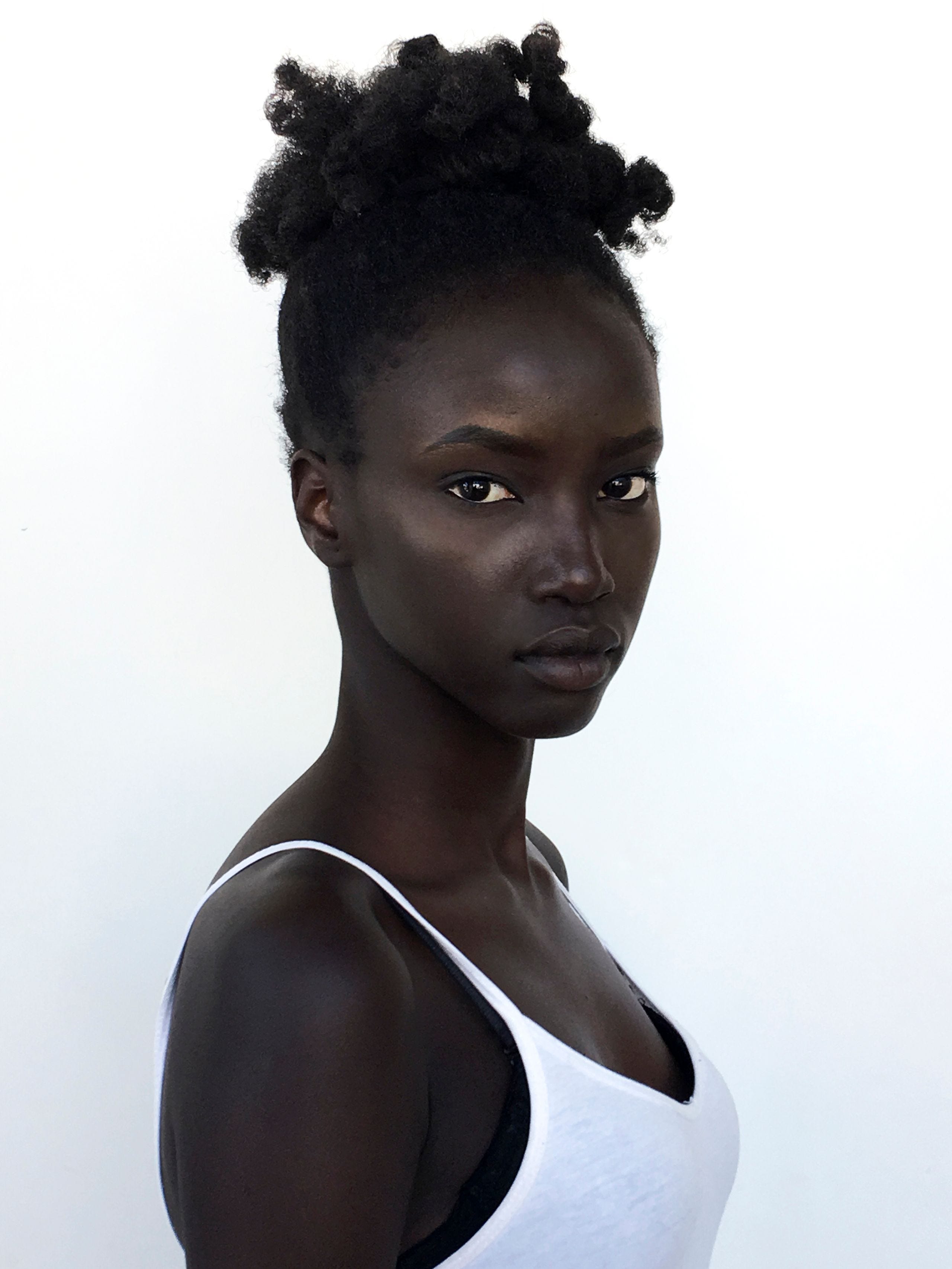
The impulse behind the “white woman dipped in chocolate” critique is protective. It seeks to expose and resist the mechanisms by which lighter skin and more Eurocentric-appearing features are privileged. But when the critique misidentifies African phenotypic variation as Europeanization, it produces several distinct harms.
First, it implicitly delegitimizes lighter-skinned Black people’s Blackness — suggesting that their appearance places them outside authentic Black identity, or that their success is fraudulent, earned by proximity to whiteness rather than by merit or by the beauty of their own African features. This is its own form of exclusion, one that reproduces the very logic of racial essentialism it seeks to challenge.
Second, it can reinforce colorism rather than dismantle it, by suggesting that lighter skin is inherently more European and therefore inherently more palatable to white audiences. This conflation of skin tone with racial authenticity is precisely the kind of hierarchical thinking that colorism thrives on.
Third, it denies the full range of Black women the dignity of having their beauty recognized as Black beauty — not as a diluted or compromised form of Blackness, but as a genuine, full, and valid expression of African phenotypic diversity. A light-skinned woman with full lips, a broad nasal structure, and kinky hair is not approximating whiteness. She is expressing a different point on the African morphological spectrum, and that deserves recognition.
Fourth, and perhaps most importantly, the framework risks making darker-skinned women complicit in their own marginalization by tying their advocacy to a narrative framework that is anthropologically inaccurate. The strongest case against colorism and featurism is not that celebrated Black women secretly look white — it is that Black women of every shade and feature set deserve equal representation, respect, and opportunity, because their features are beautiful as African features, full stop.
VI. Toward a More Accurate Framework
What would it look like to take colorism and featurism seriously while resisting the misidentification of African diversity as European proximity? It would require several shifts in how these conversations are framed.
It would mean centering the structural evidence. Colorism is documented in wage data, in casting records, in psychological research on self-esteem and discrimination. The case against colorism does not need to rest on disputed claims about facial morphology. It can rest on the measurable, concrete inequities that lighter skin confers in a society still organized around white supremacist aesthetics.
It would mean expanding the definition of what counts as Black beauty. Rather than suggesting that the celebrated end of the Black beauty spectrum is illegitimately Black, advocates for representational equity should demand that the full spectrum — from the darkest skin to the lightest, from the broadest nose to the narrowest within African variation, from the most tightly coiled hair to the loosest curl — be given equal visibility, equal valuation, and equal opportunity.
It would mean naming featurism precisely. The problem is not that light-skinned Black women exist and are beautiful. The problem is that darker-skinned women with features coded as more stereotypically African are systematically excluded, underrepresented, and undervalued. These are different claims, and the second is both more accurate and more actionable than the first.
It would mean educating broadly about African phenotypic diversity. One of the most powerful tools against the myth that Blackness has a single correct aesthetic is the simple, remarkable truth that Africa is the most phenotypically diverse continent on Earth — that all of human variation traces back to African roots, and that the breadth of what is genuinely, ancestrally African far exceeds anything a narrow Eurocentric imagination has been willing to celebrate.
Conclusion
Colorism and featurism are real. Their effects are documented and their roots are traceable to specific historical mechanisms of white supremacist aesthetics and economic exploitation. The work of dismantling them is urgent, necessary, and incomplete. Dark-skinned Black women in particular continue to face measurable disadvantages in employment, media representation, and social perception that are directly tied to the color hierarchy constructed under slavery and perpetuated through contemporary institutions.
But the solution cannot rest on a framework that misreads African phenotypic diversity as European approximation. Black beauty is not beautiful despite its African features, or in a form that approaches whiteness. Black beauty is African — in its full, scientifically documented, phenomenally diverse range. The nasal structures, facial proportions, skin tones, and cranial shapes of celebrated Black women reflect African morphological patterns, not European ones. Recognizing this is not a retreat from the fight against colorism. It is a more accurate and more dignified foundation for that fight.
The goal is not to flatten or ignore the real hierarchies that lighter skin and more Eurocentric-appearing features have historically provided access to. The goal is to insist, with evidence, that all of Black beauty is Black — and that every point on the spectrum of African phenotypic expression deserves to be seen, celebrated, and valued on its own terms, not measured against a European standard that was never designed to include it.
Black beauty, in its full morphological reality, is not an approximation of anything. It is its own complete and irreducible thing.